



When I think of my favorite exports from our northern neighbors, I think of three things: maple syrup, hockey and, since “Canada’s Guidance on Alcohol and Health” was released in 2023, a sensible, data-driven approach to alcohol guidance.
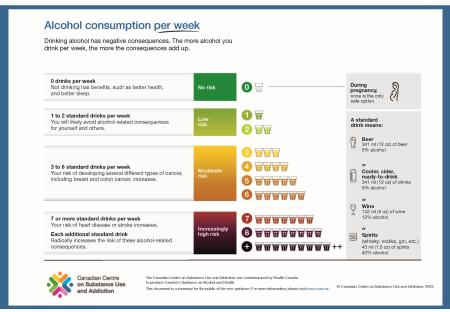
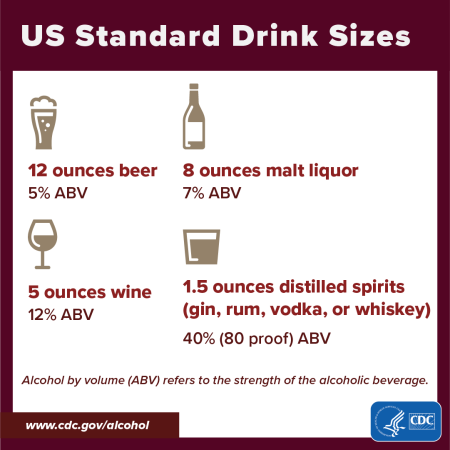
The reason I like the Canadian Guidelines so much is that they discuss risk on a spectrum. They start with the benefits of abstaining from alcohol completely and expand to the significant risks of drinking 7 or more standard drinks in a week (including one drink a day). A standard drink is twelve ounces of 5% ABV beer, (alcohol by volume), eight ounces of 7% ABV malt liquor, five ounces of 12% ABV wine, or one-and-a-half ounces of 40% ABV liquor. These recommendations are lower than previous guidelines and are aligned with the 2025 – 2030 US Dietary Guidelines for Americans.
Most people would assume that completely abstaining from alcohol is probably better for them than consuming it. That said, the actual benefits may be surprising. Though alcohol may decrease the time it takes to fall asleep initially, it also decreases the amount of time spent in REM (rapid eye movement) sleep and increases wakefulness. Abstaining from alcohol allows for better sleep at night and more energy during the day. For some people, including those who are pregnant or in recovery from alcohol use disorder, abstaining completely from alcohol is critically important.
While it may come as a surprise to some that consuming two to three drinks per week raises your risk for developing cancer, recent research demonstrates that alcohol should be recognized as a carcinogen. Alcohol, and the chemicals that stem from its metabolism, damage your body’s cells and even your DNA. If DNA is damaged in just the wrong spot, it can cause cells to multiply out of control – a process we know as cancer. Alcohol use can also lead to hormonal changes which increase certain types of cancer risk. According to the 2025 Surgeon General’s Advisory on Alcohol and Cancer Risk, alcohol contributes to almost 100,000 cases of cancer each year in the United States alone. Of the 20,000 annual deaths from an alcohol associated cancer, 17% occur in people whose alcohol consumption is within the recommended limit of two drinks per day for men and one drink per day for women set by the 2020-2025 US Dietary Guidelines for Americans.
While some studies previously suggested that mild to moderate alcohol consumption might have some cardiovascular benefit, more recent studies have shown that the risk for hypertension, aortic aneurysm, and certain types of strokes, starts to increase at 7 drinks per week. As the number of drinks per week increases to 14, there are significant increases in risks for respiratory infections, pancreatitis, cirrhosis, injuries – both intentional and unintentional, and premature death.
As April is Alcohol Awareness Month, this is the perfect time to reflect on our own drinking habits with the Canadian Guidelines in mind. Abstaining from alcohol is best but consuming less than 3 alcoholic drinks per week is probably safe. As alcohol use climbs, so does the risk of cancer, chronic disease, traumatic injury, and premature death.
Go Ducks!
Resources and Research
- Canada’s Guidance on Alcohol and Health
- Centers for Disease Control (CDC) About Standard Drink Sizes
- 2025 – 2030 US Dietary Guidelines for Americans
- Surgeon General’s Advisory on Alcohol and Cancer Risk
- Alcohol Information (SAMHSA) Substance Abuse and Mental Health Services Administration
- (855) OC LINKS – Connect to Mental Health and Substance Use Services in Orange County
- Alcohol and the sleeping brain. Colrain IM, Nicholas CL, Baker FC
- Global burden of cancer in 2020 attributable to alcohol consumption: a population-based study. Rumgay H, Shield K, Charvat H et al
- The impact of alcohol consumption on cardiovascular health: Myths and measures. Arora, M., ElSayed, A., Beger, B., Naidoo, P., Shilton, T., Jain, N., … Champagne, B.M.
- Risk thresholds for alcohol consumption: combined analysis of individual-participant data for 599 912 current drinkers in 83 prospective studies. Wood A, Kaptoge S, Butterworth A et al
- Daily drinking is associated with increased mortality. Hartz SM, Oehlert M, Horton AC, et al
About Dr. Jonathan Watson
Dr. Jonathan Watson is dual Board-Certified in Family Medicine and Addiction Medicine and is the Medical Director of Orange County Correctional Health Services. He first discovered his passion for addiction care while working as a case manager in San Francisco’s Tenderloin neighborhood. He attended Harvard Medical School before pursuing his family medicine training at Harbor-UCLA Medical Center and then an addiction medicine Fellowship at UCLA. Dr. Watson’s love of teaching has pushed him to maintain volunteer clinical professor roles with UC Irvine’s Department of Family Medicine and Loma Linda University’s Department of Preventive Medicine. Dr. Watson has remained active with the California Society of Addiction Medicine.